

Evidence-Based Design for Stronger Communities
This week, we're exploring how thoughtful design can build the social capital that makes communities resilient, connected, and thriving. For built environment professionals, understanding the relationship between physical spaces and social networks is essential for creating environments that support mental, physical, and social well-being.
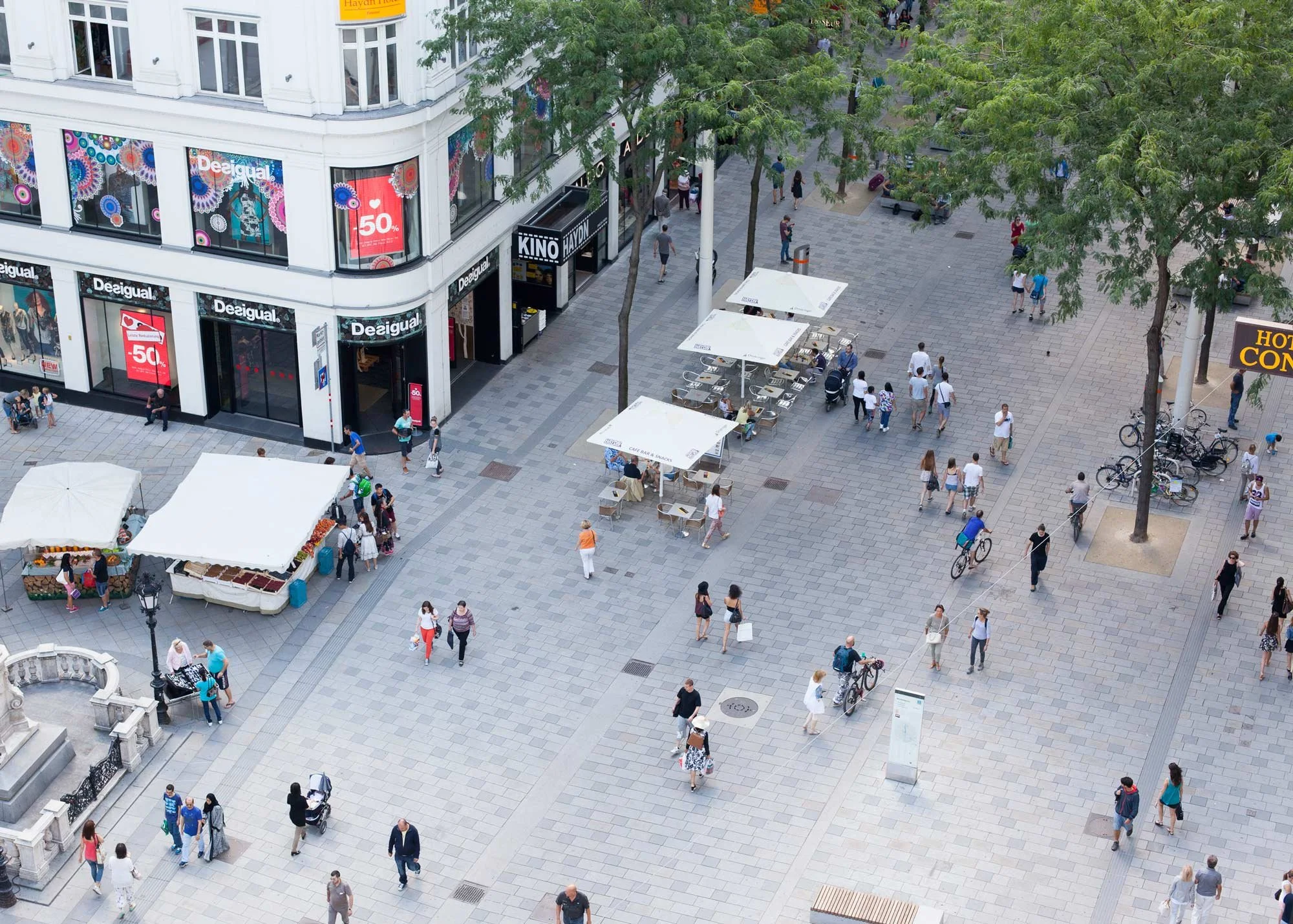
Photo by landezine-award.com | Mariahilfer Strasse, a fancy, nineteenth century shopping boulevard in Vienna.
Why Social Capital Matters for Community Resilience
Social capital—the networks of relationships, trust, and reciprocity among community members—is fundamental to resilient communities. Research shows that neighborhoods with higher social capital experience better health outcomes, increased civic participation, and faster recovery from disasters. As Dr. Mario Small from Harvard University notes, social capital serves as "the currency of community," enabling people to access resources, support, and opportunities through their social connections.
Listen to my full conversation with Dr. Mario Luis Small HERE
The built environment plays a crucial role in either facilitating or hindering these vital social connections . Studies demonstrate that designers and urban planners can increase people's social capital by creating spatial designs that facilitate social interaction among residents .
Evidence-Based Design Strategies for Social Capital
1. Create Third Places for Connection
Third places—public spaces outside of home and work—are essential for building community bonds . These informal gathering spaces, from coffee shops to libraries to parks, have been shown to strengthen social capital, foster social connection, and boost diversity and well-being . Research indicates that the social interactions in these spaces provide opportunities for making and sustaining bonds, offer relief from daily stresses, and support a sense of community .
Learn more about Third places here
2. Design for Mixed-Use and Walkability
Evidence from systematic reviews shows that neighborhoods that are mixed-use and pedestrian-oriented are most likely to promote social capital. Walkable environments with diverse land uses create more opportunities for spontaneous encounters and relationship-building . These design features encourage walking and enable residents to perform daily activities without cars, naturally increasing social interaction.
Read to full article here
3. Prioritize Shared Amenities and Communal Spaces
Shared amenities in residential and community settings are powerful tools for building social networks . Having communal amenities and shared spaces with resident events strengthens community bonds by encouraging residents of different backgrounds to interact and engage in activities together . Research shows that meaningful and long-lasting friendships develop when residents are encouraged to frequent available open shared spaces.
L&T article about shared Amenities here
4. Foster Trust Through Thoughtful Neighborhood Design
Studies reveal that neighborhood-level trust has a direct impact on cooperative behaviors and community resilience. Spatial proximity and regular interaction opportunities help build the trust necessary for communities to work together during challenges. Design elements that support "spatial bridging ties"—connections between people from different social or geographical spheres within a neighborhood—are particularly important for creating neighborhood-level social capital.
Check out Allist Ramsey Article on “How Can Thoughtful Design Transform a Neighborhood?”
Project Spotlight: Evidence in Action
Mariahilferstraße in Vienna, Austria, is a standout example of how urban design can build social capital and transform a city street into a vibrant community space. Once dominated by cars, this 1.6 km shopping street offered little room for people to gather or connect. After removing traffic and unifying street levels, the area was reborn as a pedestrian-only zone in 2010. The result: a lively public “living room” where people stroll, socialize, and support local businesses—showing how reclaiming streets for people can spark joy, foster trust, and strengthen community resilience.
Better Block's Neighborhood Interventions show how small-scale design changes can create big social impacts. Through temporary installations, colorful benches, and community art projects, these interventions demonstrate that even modest changes can spark connection, pride, and lasting community engagement.
Actionable Tips for Your Practice
Audit for Social Opportunities: Evaluate your projects for spaces where people can pause, meet, and interact naturally. Consider sight lines, seating arrangements, and circulation patterns that encourage rather than discourage social contact.
For more, check out “The Connected Community: Discovering the Health, Wealth, and Power of Neighborhoods” By Cormac Russell and John McKnight
Design Flexible Communal Spaces: Create spaces that can serve multiple functions—from yoga classes to community meetings to casual gatherings. Multi-functional spaces maximize social interaction opportunities while being cost-effective.
Incorporate "Prospect and Refuge": Design environments that offer both open views (prospect) and intimate gathering spots (refuge), allowing people to choose their level of social engagement.
Engage Communities in the Design Process: True social capital development requires community input from the beginning. Co-design processes ensure spaces reflect actual community needs and build ownership among residents.
Tools & Frameworks:
Community Resilience Design Resources - AIA's collection of tools for community engagement, risk analysis, and inclusive design.
Building Social Capital on Purpose Toolkit - Evidence-based guide for youth and community development professionals.
