

PANACHe Third Dimension
Nature
Moving from gray to green.
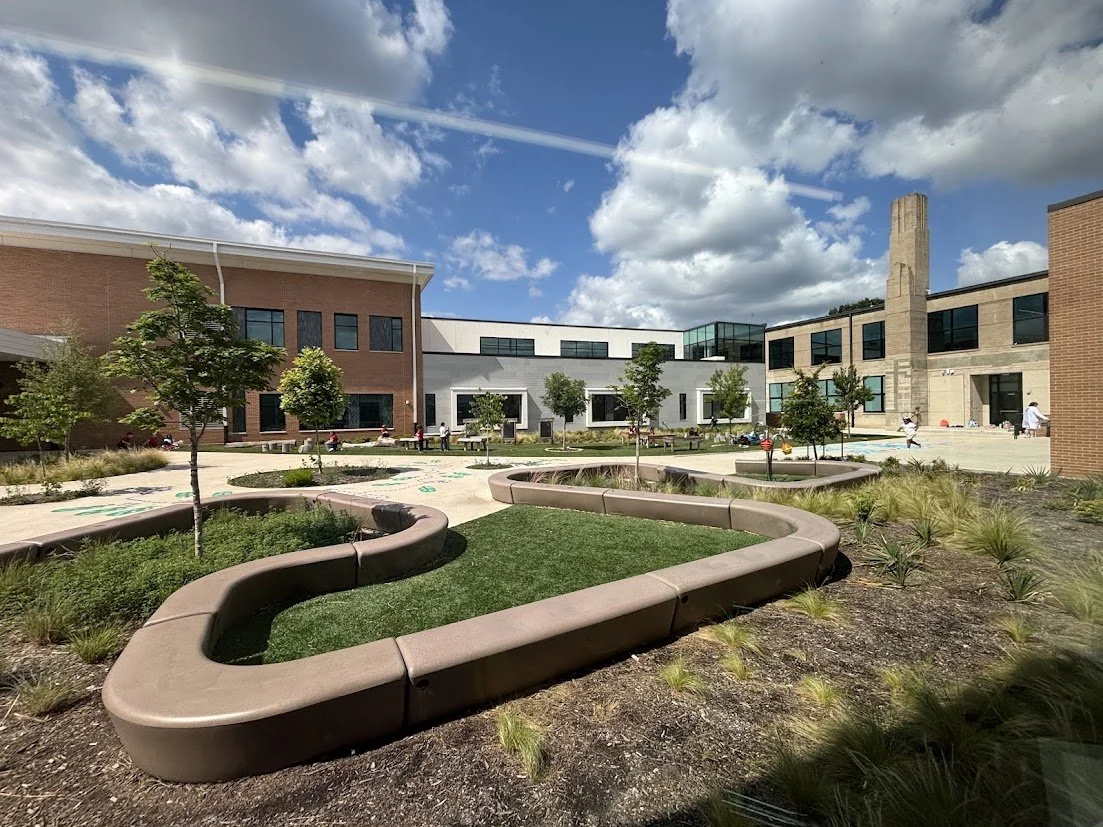
Humans evolved to find comfort in nature, a well-documented tendency called biophilia. Exposure to greenery, daylight, and outdoor space is consistently linked to better mental health, and streetscape greenery, specifically dense, well-maintained trees and plantings, is associated with stronger social cohesion and fewer health complaints. Nature's benefit isn't just decorative; it's structural to how well a place supports connection.
Biophilic design works along three distinct dimensions worth knowing by name: direct (natural elements that sustain themselves, such as daylight, native plants, animals), indirect (elements needing human upkeep, such as potted plants), and symbolic (images or virtual representations of nature, rather than nature itself). Third places that blend indoor and outdoor space, rather than treating nature as an afterthought, are measurably more effective at making people want to linger.
How Nature shows up
Across every project, Nature operates on three interdependent levers: what's built, what's programmed, and what's permitted.
Incorporate nature at multiple scales, indoors and out
Bring natural light into a space's core via windows and skylights
Provide community gardens shared by residents and schools
PHYSICAL ENVIRONMENT
PROGRAMMING
Offer ways to engage with vegetation — community gardening, garden caretaking
Partner local gardens with restaurants to support urban farming
Launch school-garden science curricula connecting kids to nature and each other
Require street trees and green medians in community planning ordinances
Advocate for greenspace minimums (10%+) in housing/zoning policy
POLICY
CASE STUDY - The High Line, New York City
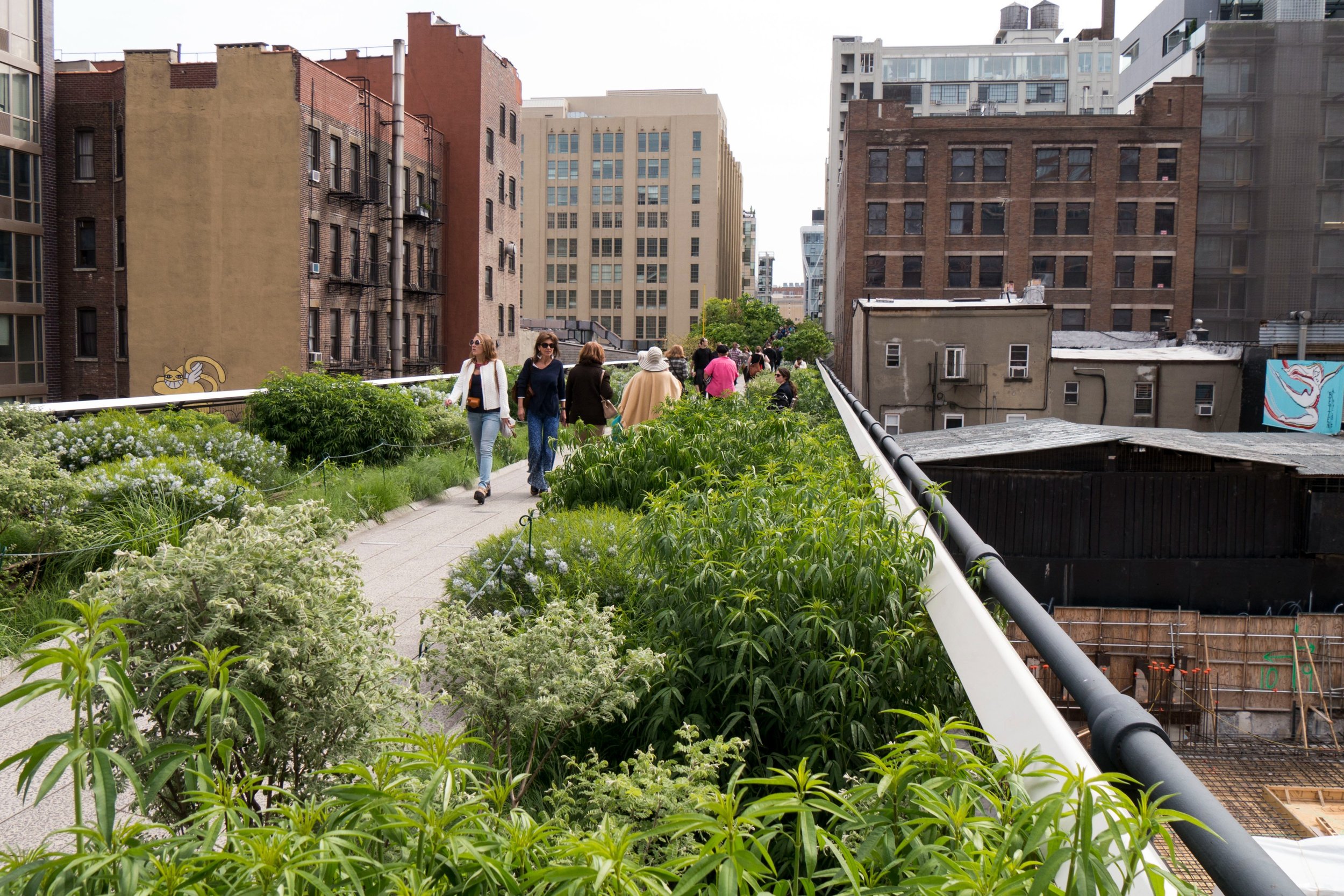
Built on a disused elevated railway, the High Line turned scarce Manhattan nature into an 8-million-visitor-a-year public space: grasses, trees, and Hudson River views alongside community gardening, nature education, and a year-round arts program. It was slated for demolition until a resident-led nonprofit, Friends of the High Line, organized to save and repurpose it.
References
Alexander C Tsai et al., 2018; "Syndemics: A theory in search of data or data in search of a theory?"Van den Berg et al., 2016. "Visiting green space is associated with mental health and vitality: A cross-sectional study in four european cities"Kevin Duff, 2012: “Evidence-based indicators of neuropsychological change in the individual patient: relevant concepts and methods”
Yingling Fan, Kirti V Das, Qian Chen, 2011. “Neighborhood green, social support, physical activity, and stress: Assessing the cumulative impact”
Frances E. Kuo, William C. Sullivan, Rebekah Levine Coley, Liesette Brunson, 1998 “Fertile Ground for Community: Inner-City Neighborhood Common Spaces”
Stephen Robert Kellert, 2008. “Dimensions, elements, and attributes of biophilic design”
McGee, Park, Portillo, Bosch, & Swisher, 2019. “Diy Biophilia: Development of the Biophilic Interior Design Matrix as a Design Tool”
See how a place measures up
Take the PANACHe assessment to evaluate an existing space, review a proposed design, or compare design options across the seven dimensions.