

How School Design Can Help Children Feel Safe
Just yesterday, I dropped off my daughter for her first day at a new school. It was our first time having her within walking distance from our home, and I was struck with how much of a neighborhood affair it was. Parents gathered outside, local high schoolers coming to cheer on the little ones as they entered - including a five-member band with drum and cymbals.
It was delightful, existing, and also very overwhelming. As we entered the school, I felt such gratitude that the walk along took us hand-in-hand past open courtyards with trees, playful artistic pieces, green grass, and blue sky above. This transparency, integration of nature, and positive distraction helped us feel a sense of openness to reduce the stimulation. These are things that mirror the findings around designing school with a trauma-informed design (TiD) approach.
Trauma-Informed School Design
1 in 6 students have faced four or more traumatic events, also known as Adverse Childhood Events (ACEs) —and rates rose again after the pandemic. Yet our traditional “cells and bells” school layouts can feel distressing for these vulnerable kids.
Trauma-informed design flips this model.
Give students choice: create “refuge” zones for breaks rather than endless hallways.
Ease sensory stress: add natural light and plants to soften overwhelming environments.
Balance safety and freedom: use clear sightlines that keep everyone secure without feeling watched.
This approach helps all learners. Flexible, emotion-friendly spaces let every student—whether they’ve endured trauma or not—focus, regulate stress, and truly learn.
2 Evidence-Based Resources
Psychology Today: "How School Design Can Help Children Feel Safe": My article exploring core trauma-informed design principles and their practical application in educational settings.
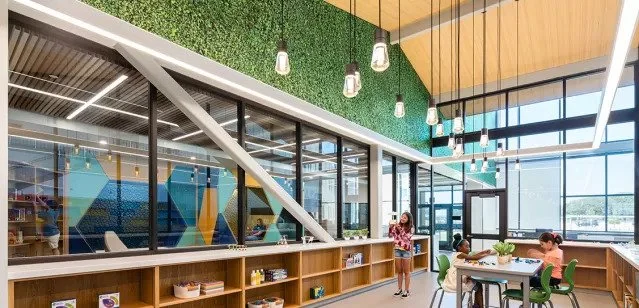
The Design of Safe, Secure & Welcoming Learning Environments Report: Federal guidance on balancing security measures with trauma-informed design to create environments that feel both protected and nurturing, from the AIA’s Committee on Architecture for Education.
1 Project Example
The classroom pods at Arlington ISD C.B. Berry Elementary School (below) are a great example of design that both feels safe and supportive to be in, and has a high degree of security.
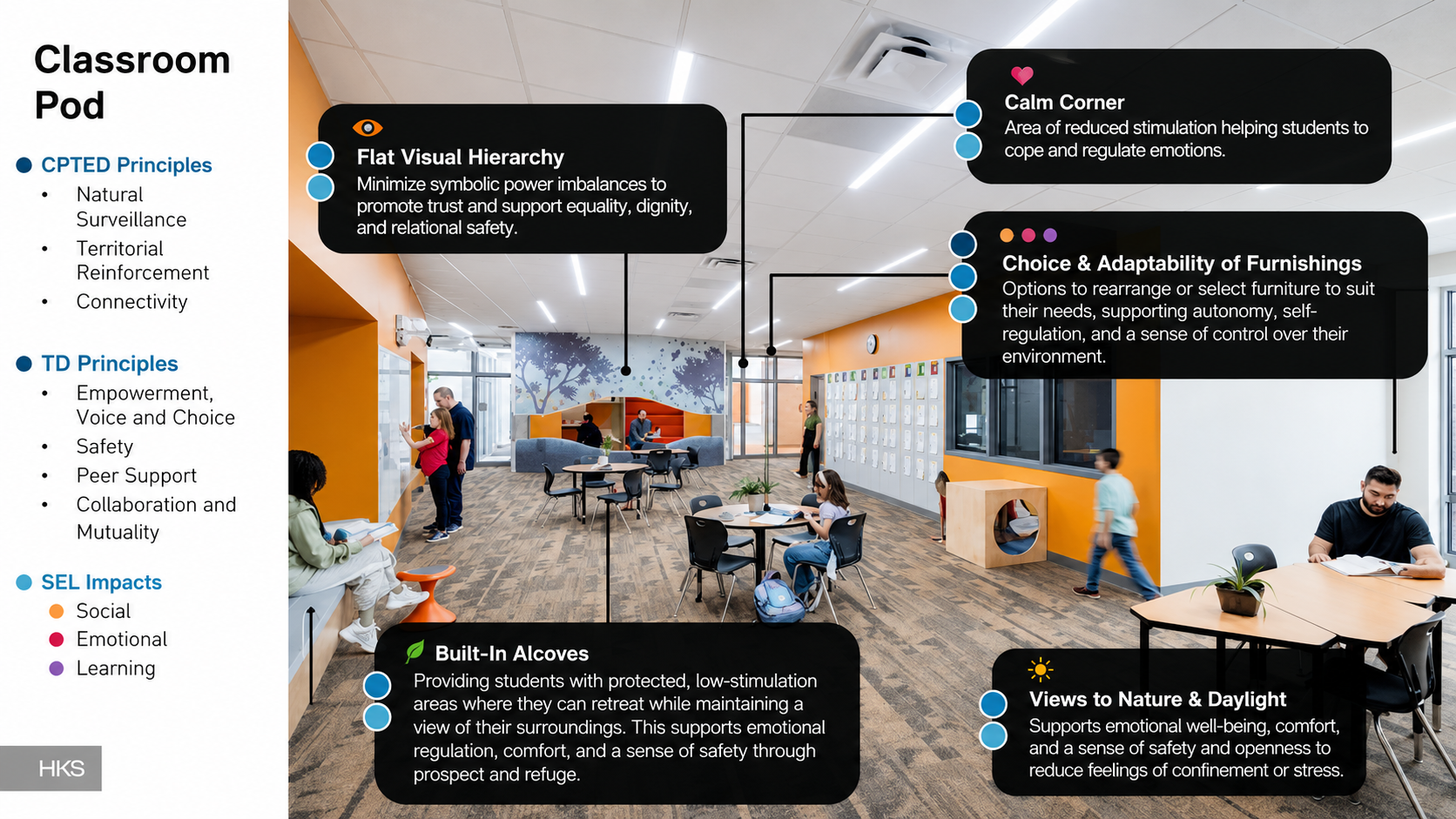
Above is a slide from our Architecture for Learning Environment’s (A4LE) presentation with Wayne Reynaud, AIA, Renae Mantooth, PhD., Sita Lakshminarayan, AIA, and myself. Callouts for Crime Prevention Through Educational Design (CPTED), TiD, and Social and Emotional Learning (SEL), demonstrating their synergies and how they may manifest in design.
Invitation
Whether you're an educator, parent, architect, or community member, you have the power to advocate for learning environments that heal rather than harm. What opportunities do you see in your community to advocate for more healing-centered learning environments?