

Can a City Have a Soul?
Last week, I sat on stage at SMU’s Dallas Hall with five remarkable thinkers from across our city, economists, artists, journalists, and civic leaders, exploring a deceptively simple question: Can a city have a soul?
The room was full, buzzing with the kind of energy you only get when people love the place they live and also want it to be better. We talked about our neighborhoods, our histories, and our hopes for Dallas. We wrestled with big questions: What does “soul” mean for a city? And how do we cultivate it especially as we grow and change?
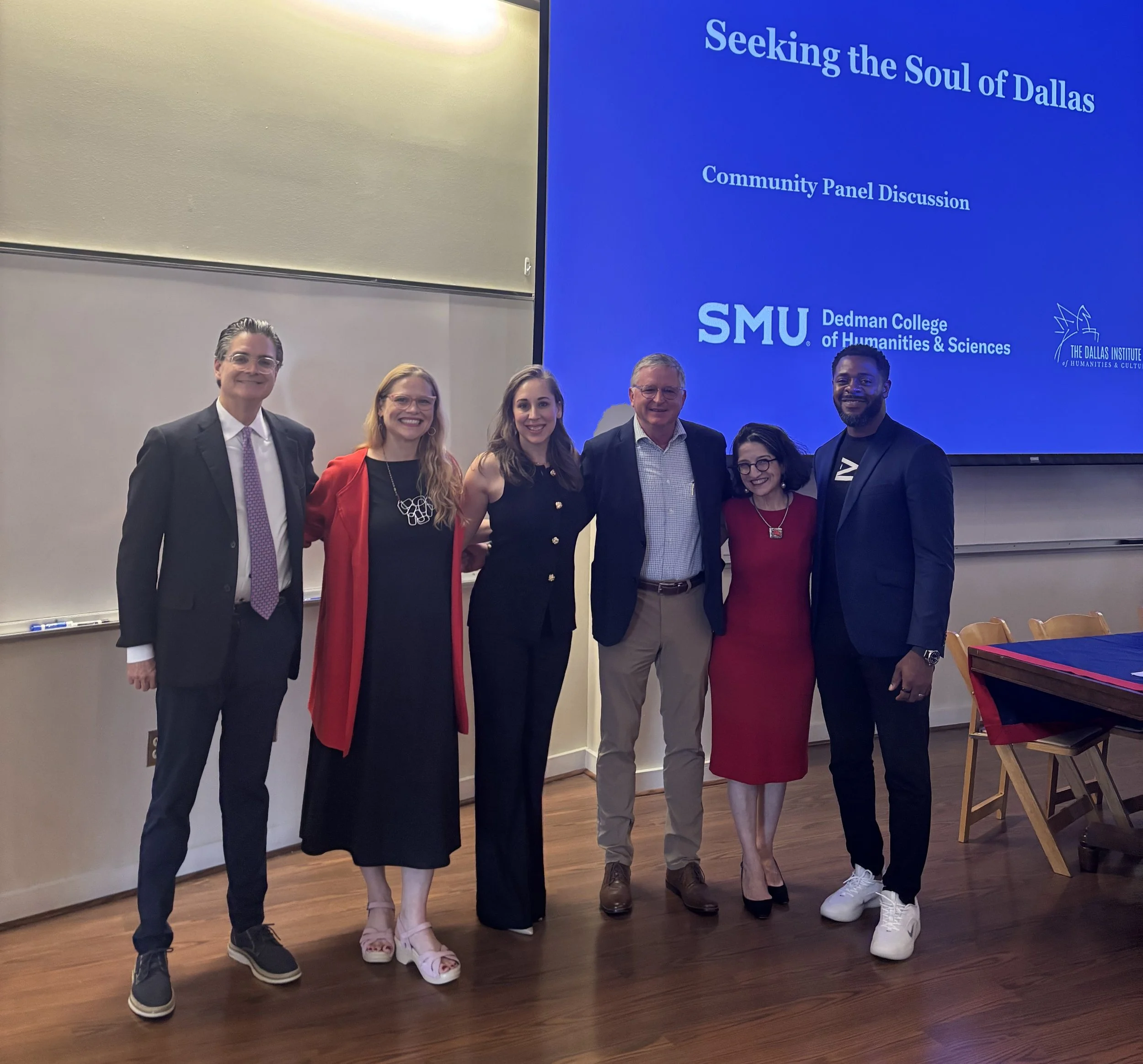
Five Perspectives on “Soul”
Economics: “Dallas isn’t soulless, it’s a different hodgepodge than anywhere else,” said Cullum Clark, Senior Fellow at the Bush Institute. “If you told me about a city's productivity, its housing and land use policies, its mix of natural and human-made amenities, and its economic history, I could predict a lot about its soul.”
Arts: “Dallas has a soul. I left for New York and Paris, and each time I came back, it had grown,” said Emily Earnst, Artistic Director of the Dallas Children’s Theater. “The arts district has become more robust, and the city itself has quietly nurtured my work.”
Journalism: “Every community has a story it tells itself. What’s ours?” asked Ryan Sanders, Commentary Editor at the Dallas Morning News. “In Austin, people say live music. In Seattle, buy an umbrella. What do people say when you move to Dallas?”
Education & Civic Leadership: Bryon Sanders, Dallas ISD Trustee, gave perhaps the most moving example: South Oak Cliff High School. “Students walked out to protest unsafe conditions. Years later, the community got a $52 million investment and built a beautiful new campus. Enrollment surged. Test scores rose. Athletics flourished. When you invest in a community’s soul, people rise to meet it.”
Architecture & Human Values: “Architecture can either cover over a city’s soul with a façade or provide the air for it to grow,” I shared. “It’s not just about planting a seed, it’s about designing spaces that reflect our values and allow people to be seen at a human scale.”
Themes That Emerged
Imagination as a Civic Muscle: We must envision what we’ve never seen before, a thriving, multicultural city without zero-sum hierarchies. As Bryon put it, “We need to live in our collective imagination.”
Investing with Intent: Housing, infrastructure, and shared spaces must be designed for connection and dignity, not just quantity.
Telling Our Own Story: As Ryan noted, “Let’s not compare ourselves to other cities. Let’s be the best version of Dallas.”
Arts and Humanities as Anchors: Seemee Ali reminded us, “Cultivating imagination doesn’t take money, but it does take effort. It’s lifelong work.”
Project Example: South Oak Cliff High School
South Oak Cliff High School went from crumbling infrastructure to a state-of-the-art campus through community activism and public investment. Enrollment rose, academic performance improved, and pride surged, a living example of how physical places can help heal and activate a community’s soul.
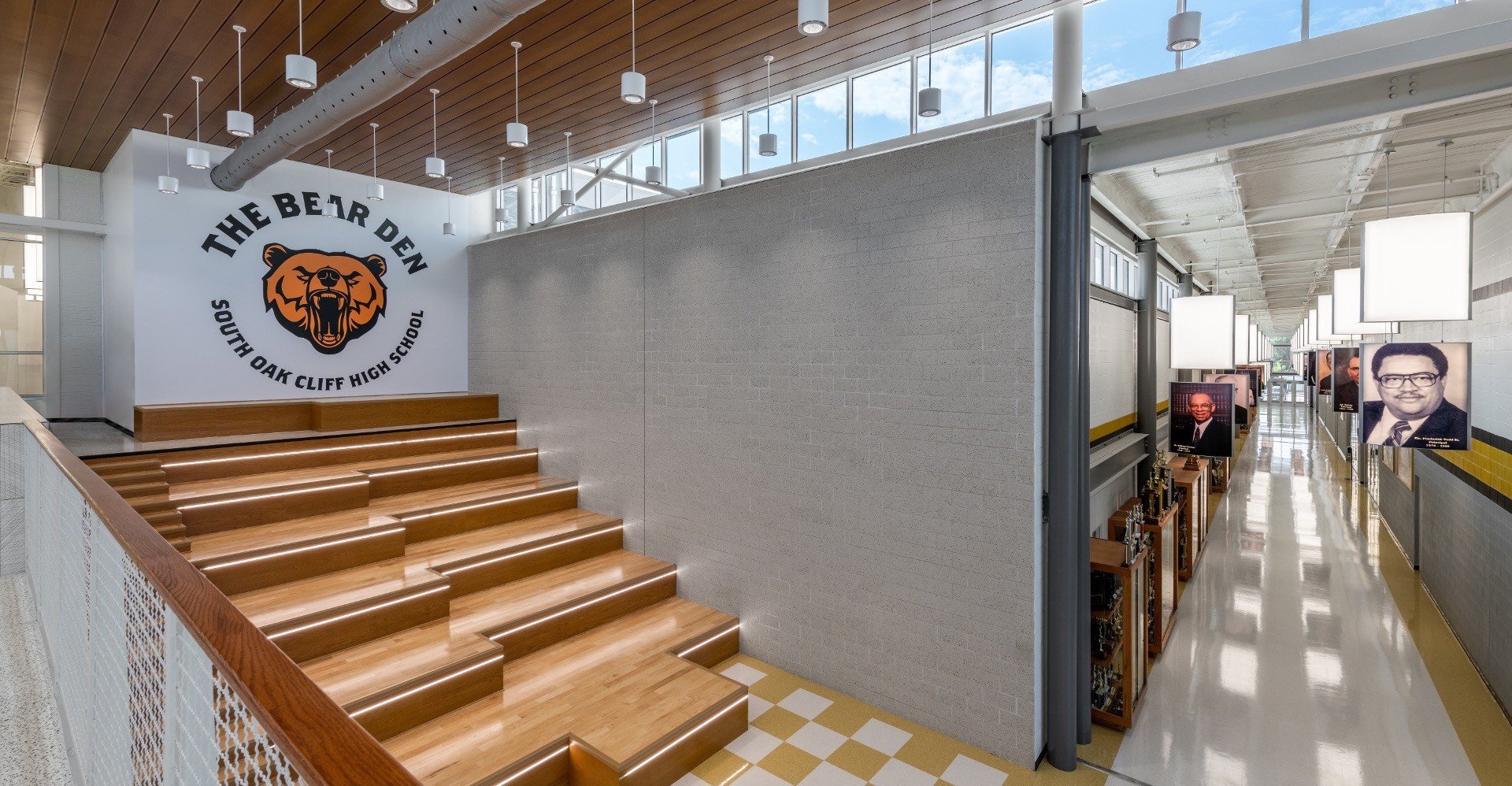
Photo source: Texas School Architecture
Invitation
Whether you’re an architect, educator, policy maker, or resident, you have the power to cultivate your city’s soul. Where do you see opportunities in your own neighborhood to invest in imagination, dignity, and connection?
Thank you for being part of this conversation and this community. Let’s keep imagining Dallas and the world we want to build together.