

Where's the Human in the Monumental?
How monumental architecture and global events can create human connections.
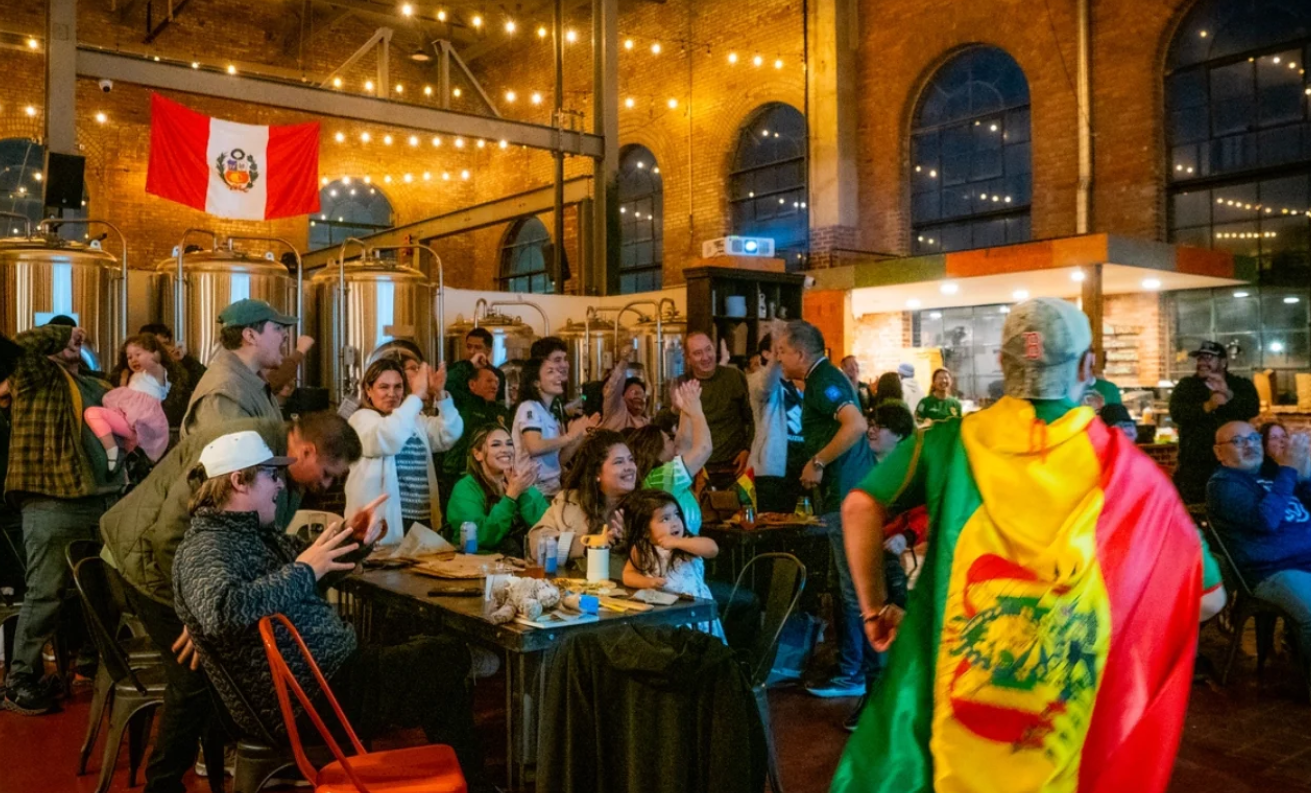
This weekend my family headed to a local brewery to watch the match.
Inside: simple wooden tables and benches that could be pushed together however the room needed them. A popcorn maker in the corner, open to anyone. Three generations of one family at the next table. Kids weaving between adults with the particular freedom of a place that wasn't expecting them to behave like adults.
We met up with other families from my daughter's soccer team. The kids watched the match in fits and starts, taking breaks to race each other on the concrete strip outside. I refereed. Then after the match we stuck around to play cards, the way you do on a Sunday when nobody has anywhere to be.
The game gave us a reason to gather. The place made it easy. The cards our friends brought kept us there long after.
My husband grew up playing soccer in the streets in Mexico. He has passed on his love of the game to our daughter, and slowly, over the years, I have found myself swept up too — by the beauty of the sport, by its universal language that cuts across geographies and language.
I didn't grow up in a soccer family. But I'm grateful I've found myself in one.
And watching this scene this weekend — the brewery, the families, the kids, the casual rhythm of an ordinary afternoon — I noticed something that surprised me. What was happening in that small wooden room was happening, in some form, all over the world this summer.
Six billion people are expected to watch matches during the FIFA World Cup this year. That number is almost impossible to hold in your head. The largest shared human experience on the planet, happening across living rooms and stadiums and bars and breweries and front yards on every continent, simultaneously.
And yet none of those six billion people experience the World Cup as six billion. They experience it as the room they're in. The seat. The friend next to them. The popcorn within reach. The kid running outside.
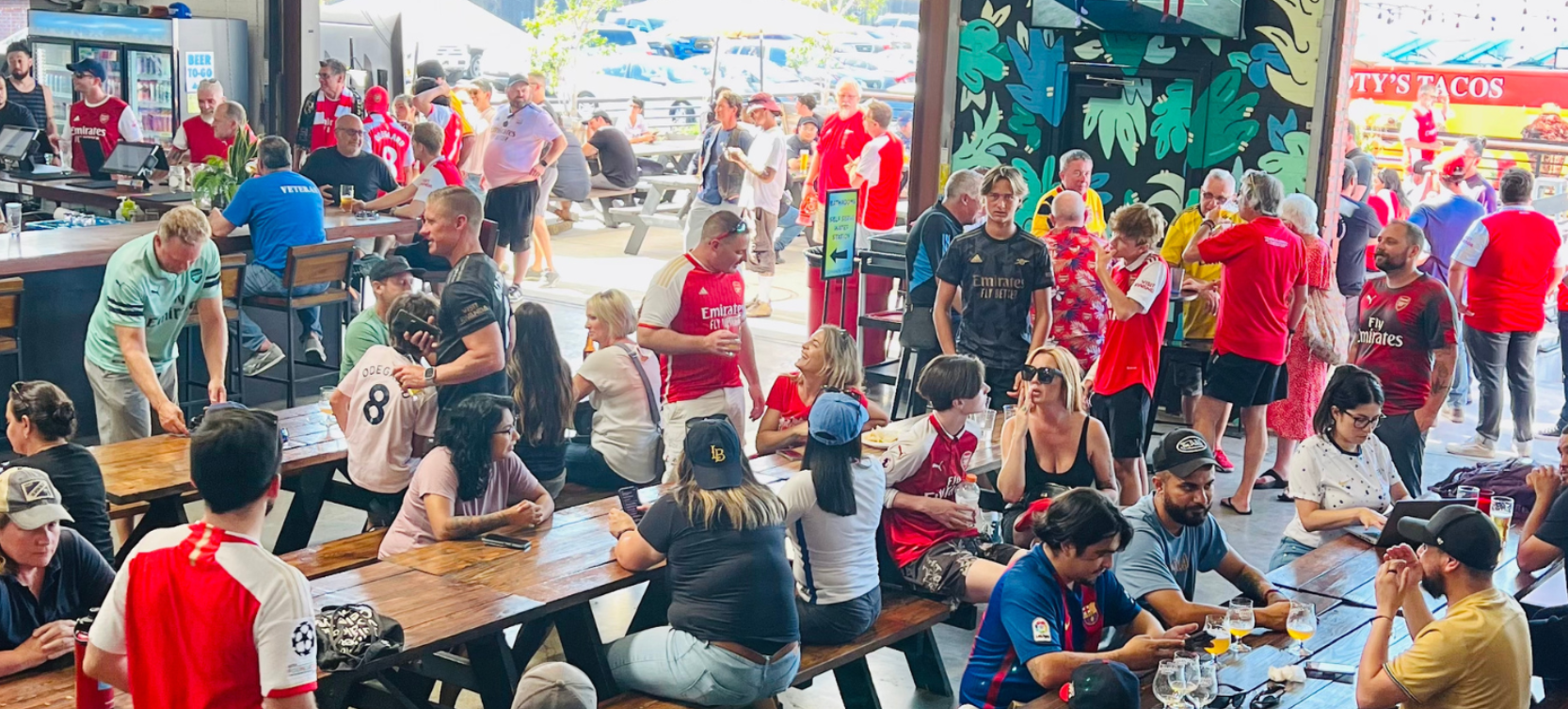
This is the part of stadium design I've been thinking about most lately — and the part I think is least understood based on what' I’ve learned from the amazing colleagues around me.
The instinct, when you build something massive, is to design for the massive. The architectural feature. The seating capacity. The iconic silhouette. These are real, and they matter. But what I've come to understand from designers who work on stadiums is that the magic of a stadium — the awe of walking in, the collective gasp when a goal scores, the strange and powerful feeling of being held by something larger than yourself — depends on something most people would consider the opposite of grandeur.
It depends on human scale.
The seat that fits a body. The sightline that lets you see clearly without straining. The walk in that builds anticipation at the pace of a human stride, not a car. The concourse that's wide enough for movement but tight enough to feel like somewhere. The food within reach. The neighbor in the next seat whose face becomes familiar over three hours of shared attention.
Without these, 80,000 people is just a crowd. With them, 80,000 people becomes something closer to community.
The huge only holds when the small is also true.
Researchers who study collective experience have a name for what happens in moments like these — collective effervescence, sociologist Émile Durkheim called it more than a century ago. The synchronized response. The shared focus. The temporary dissolution of the line between self and group that makes us feel, for a few hours, that we are part of something bigger than ourselves.
What Durkheim observed in ritual gatherings is what we feel in a stadium, in a brewery watching a match, in a living room with family during the final minutes of a tied game. The mechanism is ancient. The forms keep changing.
What stays the same is the requirement: the gathering only works when each person in it can find their place. The bench at the edge of the brewery. The chair near the popcorn. The seat in row 23. The kid who needs to run before they sit again.
The scale matters. But the scale only matters because the small things are true.
I'm not sure I would have noticed this if I hadn't grown into a soccer family rather than been born into one.
From the outside, the World Cup looks like the grand event. From inside it, it looks like a brewery on a Sunday afternoon. Families I likely wouldn't have known otherwise. My family teaching me how to slow down.
The game gave us a reason. The place made it easy. The afternoon held us long after.
The huge holds when the small is also true. That's the design — at every scale.
Further reading:
What is human scale and why does it matter for human connection?
Want to learn more about collective effervescence?
Curious about how stadiums are designed to hold global moments? Read more about the modern fan experience here.
