


How You Arrive Shapes Who You Know
The ties that hold a community together aren't usually built through effort or intention. They're built through repeated presence in the same place at the same time. This piece explores the surprising science of how your commute, your transit stop, and the way your neighborhood is designed are quietly determining who you know — and who you never will.

Human Scale in Architecture: Why It Matters and How to Design for Comfort
Most of us can feel the difference between a space that fits the human body and one that doesn't — the too-wide corridor, the ceiling that soars past comfort, the plaza that makes you feel exposed rather than held. This piece explores the neuroscience of human scale and why getting it right matters far more than aesthetics.
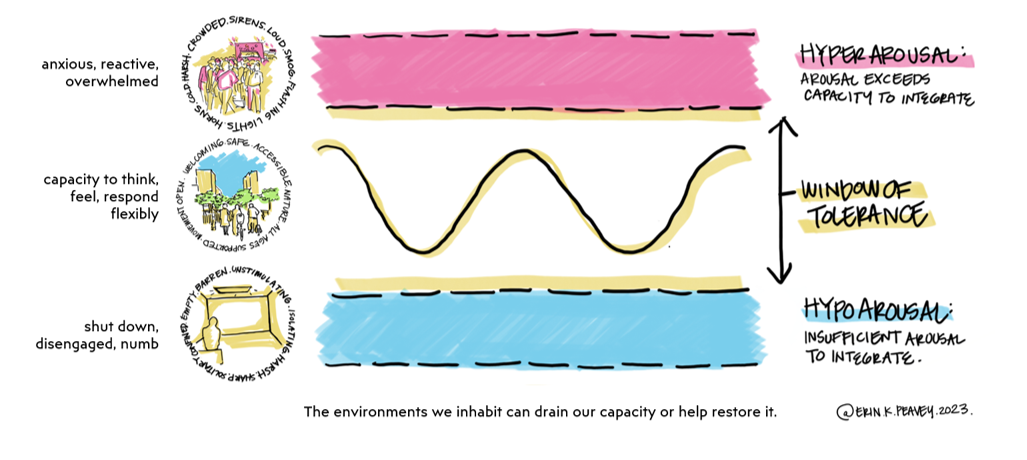
But First, Regulation
Before connection can happen, the nervous system has to stand down. This piece explores why so many spaces — schools, offices, hospitals — are asking people to connect before providing the conditions that make connection physiologically possible. And what it looks like when design gets the order right.
Loneliness is a Public Health Emergency. Design Can Help
The WHO's 2025 report names social connection as a global health imperative. For those of us who design places — or simply move through them — it's also a call to look differently at the spaces we occupy every day.

How Our Brains React to the Spaces Around Us
You've felt it — walking into a building and sensing something before you've formed a conscious opinion about it. The science of why that happens is more precise than most people realize. This piece explores what your brain is actually doing in the first seconds of entering a space.
Can the Built Environment be Designed for Social Connection?
What do we actually mean when we say "designing for connection"? This piece breaks down the question — how architecture, interior design, and urban planning shape our social health, and what the evidence says about what works.

Why Solitude Supports Social Connection
Connection to others requires first being able to connect to yourself. This piece explores the surprising relationship between solitude and social health — and what it means to design spaces that honor both the need to be with others and the need to step away.

Design That Celebrates Neurodiversity
For highly sensitive people and those with sensory processing differences, most spaces weren't built with their nervous systems in mind. This personal piece explores what it means to design for the full range of human experience — and why doing so makes spaces better for everyone.

What Helps Create a Connected Community?
A connected community isn't something that happens organically. It requires the right spatial conditions — and the right people in the profession to design them. This piece explores what the research says about community connection and why representation in design matters.

Takeaways from Harvard’s Forum on Social Connection
More than half of American adults say having close friends is essential to a fulfilling life. And yet the trend lines are moving in the opposite direction. This piece shares key insights from Harvard's forum on social connection — including what the research says about how the built environment fits into the picture.