

The Neighborhood Made It Possible
What families can access within a ten-minute walk may shape more than convenience.

This past Sunday was the kind of Texas morning that reminds you why you stay — cool, bright, the air still soft before summer arrives and doesn't leave. My daughter and I were heading to the park when I paused and texted a neighbor a few blocks down. Her daughter might want to join. I hesitated — I didn't want to intrude on Mother's Day plans — but I pushed past it and sent the message anyway.
She wrote back immediately. Yes, please. It would give her time for the massage she'd been trying to find space for.
We rode through tree-lined streets, wind in our hair, neighbors calling out Happy Mother's Day from front yards. The girls played for five hours — park to home to home again, the kind of afternoon that doesn't require organizing because the place makes it easy.
What made it possible wasn't only the willingness of two mothers to be open with each other, though that mattered. It was the design of the neighborhood — a park within cycling distance, tree-lined streets worth riding through, no highway between us and somewhere green and good. The journey itself was part of what made it worth leaving.
Researchers studying families are finding that this kind of proximity does more than enable a pleasant Sunday.
A study published in BMC Public Health examined over 1,000 families during the COVID-19 pandemic and found that parents who had a park within a ten-minute walk reported measurably better mental health than those who didn't — lower rates of anxiety and depression, even after accounting for income and other factors. They also spent more days outdoors with their children. The park didn't just benefit the parent or the child. It created the conditions for them to be outside together — and that togetherness carried its own weight.
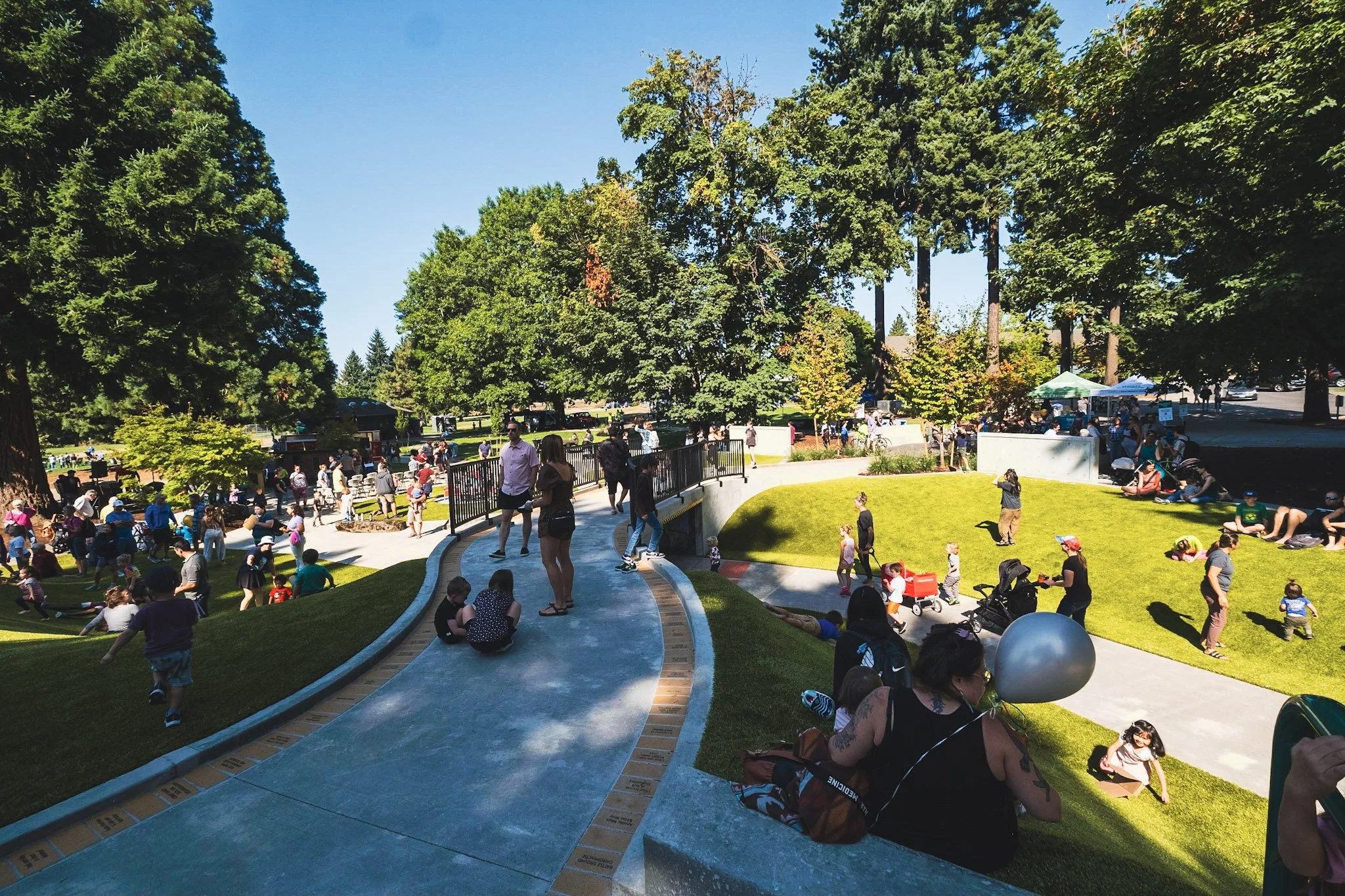
The research on children tells a similar story.
A 2024 study in JAMA Network Open followed more than 2,000 children across 41 states and found that young children — ages two to five — living near more green space had measurably fewer symptoms of anxiety and depression. The association was strongest in early childhood, when children spend most of their hours close to home. By middle childhood, when kids are away at school more of the day, the relationship fades.
Which suggests it isn't green space in general. It's green space that's reachable from where you live.
A large study in The Lancet found something similar among new mothers — lower rates of postpartum depression among women living on streets with more trees. Not near large parks. Not in generally green areas. Trees visible from where they walked on an ordinary Tuesday.
The pattern across these studies points in the same direction. What protects mental health isn't a special trip to nature. It's nature woven into the fabric of daily life — close enough that saying yes requires almost nothing.
Those five hours on Sunday didn't require advance planning or intentional effort. They required a neighborhood that made the idea easy.
Where we plant trees, whether streets feel safe enough to ride through, whether a parent can get two kids to a park without a car, these decisions shape what families have access to during some of the most demanding years of their lives. That's not a landscaping question. It's a health question. We just haven't been calling it one.
This Mental Health Awareness Month, the conversation about connection and mental health is getting louder. The research suggests we widen it - to include the places where daily life unfolds. The conditions for mental health aren't only inside us. They're outside our front doors too.
If you want to go deeper:
Kasley Killam on The Mel Robbins Podcast — Kasley lays the foundation for why social health is as critical to overall wellbeing as physical health, and what the science says about why connection is getting harder.
My TEDx Talk — where I pick up the thread on place, and share what the environments around me made possible during my own early experience with postpartum loneliness.