


Human Scale in Architecture: Why It Matters and How to Design for Comfort
Most of us can feel the difference between a space that fits the human body and one that doesn't — the too-wide corridor, the ceiling that soars past comfort, the plaza that makes you feel exposed rather than held. This piece explores the neuroscience of human scale and why getting it right matters far more than aesthetics.
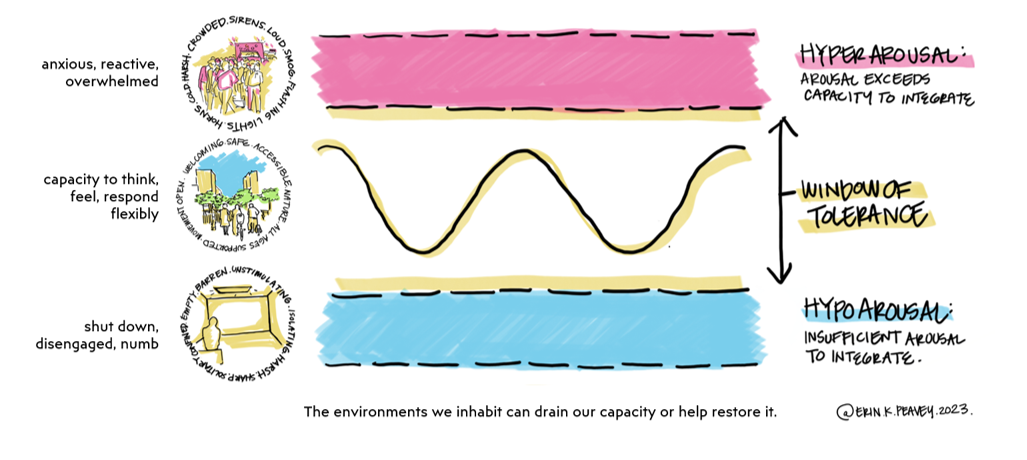
But First, Regulation
Before connection can happen, the nervous system has to stand down. This piece explores why so many spaces — schools, offices, hospitals — are asking people to connect before providing the conditions that make connection physiologically possible. And what it looks like when design gets the order right.

Design That Celebrates Neurodiversity
For highly sensitive people and those with sensory processing differences, most spaces weren't built with their nervous systems in mind. This personal piece explores what it means to design for the full range of human experience — and why doing so makes spaces better for everyone.