

Pop-Up Joy: How Temporary Places Reveal What We Really Need
Every time we enter a festive season - whatever it looks like where you live - our public spaces reveal something important about us.
Not because of decorations or events alone, but because something deeply human comes back into focus.
Across history and cultures, our lives have followed cycles and seasons: gathering, resting, returning, rebuilding.
Different climates. Different traditions. Different holidays.
But the same pattern - spaces that invite us back into community.
During festive periods around the world, ordinary places often transform into something else:
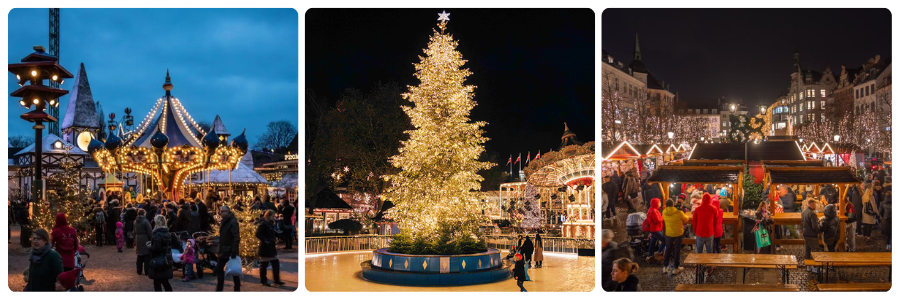
A plaza becomes a market.
A street becomes a celebration.
A waterfront becomes a gathering place.
These are pop-up third spaces-short-lived environments that make connection feel almost effortless. And whether they show up in December, during Diwali, Lunar New Year, Eid, Carnival, Ramadan nights, or mid-summer festivals, they tend to share the same ingredients:
Shared ritual people intuitively understand
Sensory richness that lowers social distance
Low-barrier belonging - arrive as you are
Micro-interactions that stitch strangers into a moment of community
Project for Public Spaces (PPS) has taught this for decades: people thrive where places invite participation.
Festive-season public spaces-across continents-prove this again and again.
But here’s the larger truth:
If temporary environments can shift how we relate so quickly, maybe the real lesson isn’t about a specific season at all.
Maybe it’s about remembering that humans everywhere are shaped by rhythm.
We need cycles that help us return to each other, to meaning, to a sense of place.
And layered through these traditions is something else: Gratitude.
In many cultures, festivals are built around giving thanks-sometimes explicitly, sometimes through the simple act of gathering and sharing space.
It’s a social glue as much as a feeling.
International Lessons: Cities That Treat Pop-Up Social Space as Infrastructure
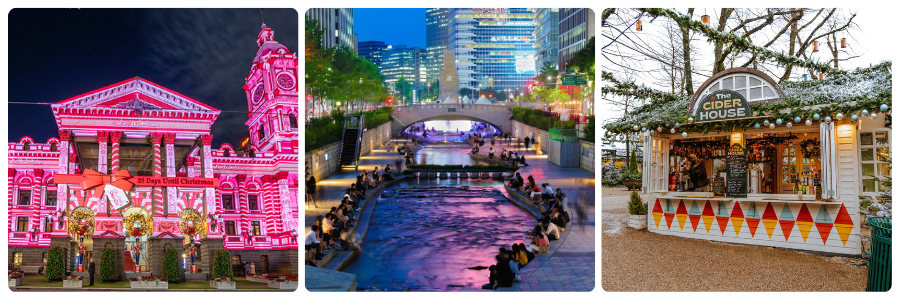
If the holidays show us what’s possible, some cities live this way year-round.
• Vancouver builds seasonal parklets that shift with weather - blankets, windbreaks, movable seating - proof that winter isn’t a barrier, only a design challenge.
• Seoul turns the Cheonggyecheon corridor into a year-round social spine where festivals, lighting, and markets act like continuous micro-holidays.
• Copenhagen leans on hygge - not as an aesthetic, but as a social operating system. Warmth, proximity, candles, narrow streets. Intimacy as infrastructure.
• Melbourne activates laneways with rotating art, micro-events, and vendors that make “temporary” feel like a civic rhythm rather than an exception.
PPS calls these “Lighter, Quicker, Cheaper” interventions, but the payoff is anything but cheap: People come alive when places give them a role to play.
A Closing Thought
Holiday pop-ups prove one thing: people want to gather - they just need the right spaces.
If we designed all year like we do in December, our cities would feel more like homes.
Joy and connection aren’t seasonal. They’re infrastructure.
Learn More
If you’re exploring how architecture, planning, and social health intersect-or want to build environments that help people thrive-here’s where to dive deeper:
How to Create a Play Ritual for Your Community by Charles Vogl
Why Healthy Rituals Can Boost Mood During Seasonal Transitions