

Opportunity Isn’t Just About Where We Live
We often debate whether opportunity should move to people — or people should move to opportunity.
Mobility or investment. Relocation or revitalization.
It sounds like a logistical question.
But long-running research synthesized by Raj Chetty and colleagues at Opportunity Insights — including evaluations of the HOPE VI program — suggests a more structural truth: housing units alone rarely produce the most durable gains. The gains that do last are supported by changes in neighborhood networks, schools, services, and everyday life.
In other words: opportunity didn’t just relocate.
It embedded.
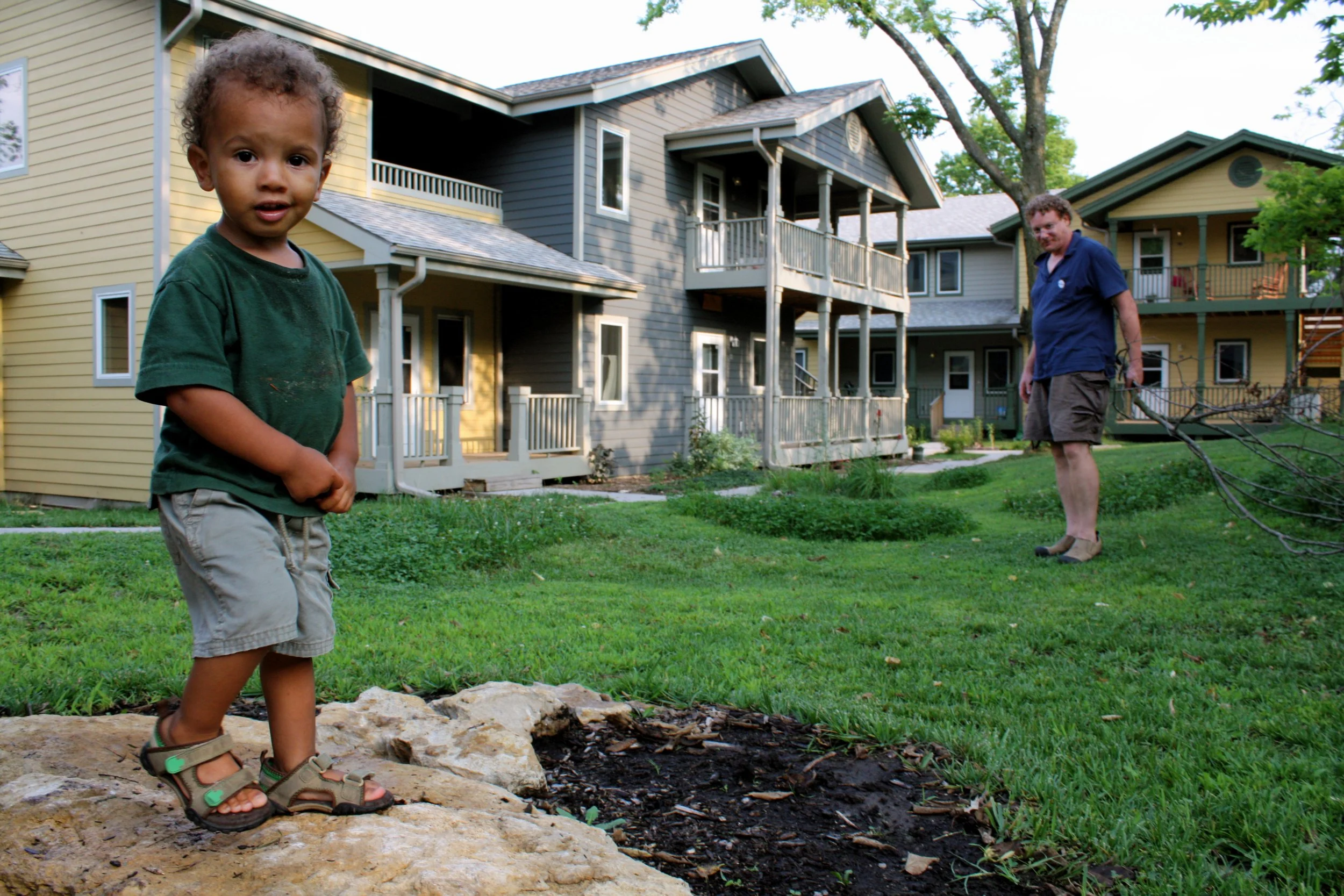
That distinction matters because we tend to treat opportunity as spatial — something defined by address or proximity. But opportunity is also relational — and physiological.
That’s where the concept of social health becomes useful. Social health describes how the conditions around us shape our capacity to form and maintain supportive, enduring connections.
Housing matters. Stability matters. Access to services matters.
But those inputs only become opportunity when they produce sustained social life in the environments where people live.
Design Is a Structural Determinant of Social Health
Clinical care accounts for only 10–20% of overall health outcomes. The built environment is a structural contributor — influencing stress load, social cohesion, and long-term wellbeing.
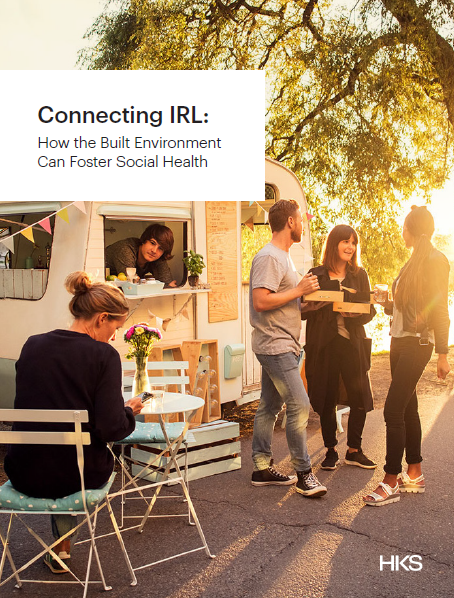
In Connecting IRL, I outline six research-informed design conditions that support social health across neighborhoods, workplaces, and civic spaces.
Full report: Connecting IRL: How the Built Environment Can Foster Social Health
Regulating Places
A related insight came up recently in my Psychology Today article on learning: regulation, not just motivation, determines whether our nervous system can access attention, memory, and flexible thinking. When chronic stress narrows that regulatory window, effort alone cannot compensate.
The same mechanism shows up in neighborhoods.
Environments that increase unpredictability, fragmentation, or vigilance elevate stress load. When stress accumulates, participating in everyday social life - attending meetings, dropping by a neighbor’s porch, joining a school event - becomes costly.
Conversely, environments that support predictable interaction, navigable space, and shared presence lower the physiological cost of connection. Over time, those conditions compound into denser, more resilient networks. This was not because people are required to connect, but because connection becomes biologically affordable.
Opportunity, then, isn’t just a question of geography.
It’s a question of whether environments make sustained social life possible - not merely imaginable.
For more on how environments shape regulation and learning, see my full piece here.