

From Policy to Place: How We Build the Architecture of Belonging
Human Scale, Real Connection
Last week, I found myself in Atlanta at the 2025 Social Connection Conference – Seeds of Connection – hosted by The Foundation for Social Connection and Healthy Places by Design—a gathering unlike any I’ve attended before.
Many of the amazing people I met there I’d only ever known through tiny rectangles on a screen. Yet here we were—sharing space, trading stories, and realizing how connection can grow even across years and miles.
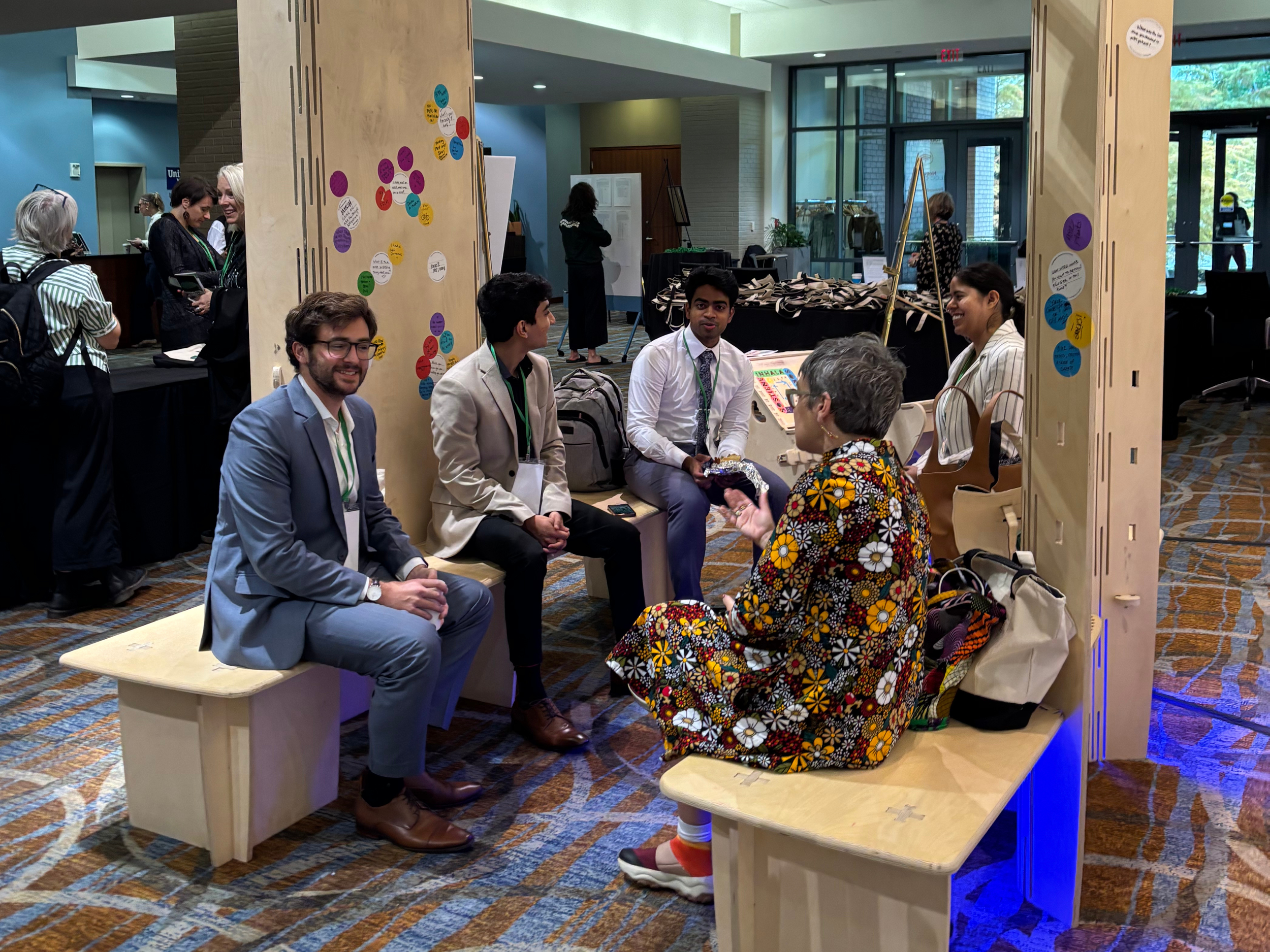
At the center of the conference floor, three small wooden structures built by Better Block transformed an ordinary corridor into something remarkable. Simple alcoves, benches, and canopy-like frames became places of refuge and conversation. They were human-scale in the truest sense—inviting people to linger, listen, and connect.
I returned to those alcoves again and again, talking with colleagues from across the nation—people doing vital work in social health, design, and belonging. Sitting within those crafted corners made it easier to exchange ideas honestly.
Nearby, a sensory room offered a quiet, restorative escape—a Godsend when finishing last-minute slides or simply taking a breath. What struck me most was how it wasn’t treated as a curiosity to photograph, but as a space to experience calm.
That distinction matters. Design for belonging requires not only beauty and function, but deep respect for the full range of human experience—including those who need a moment to step away.
Connection Is Infrastructure
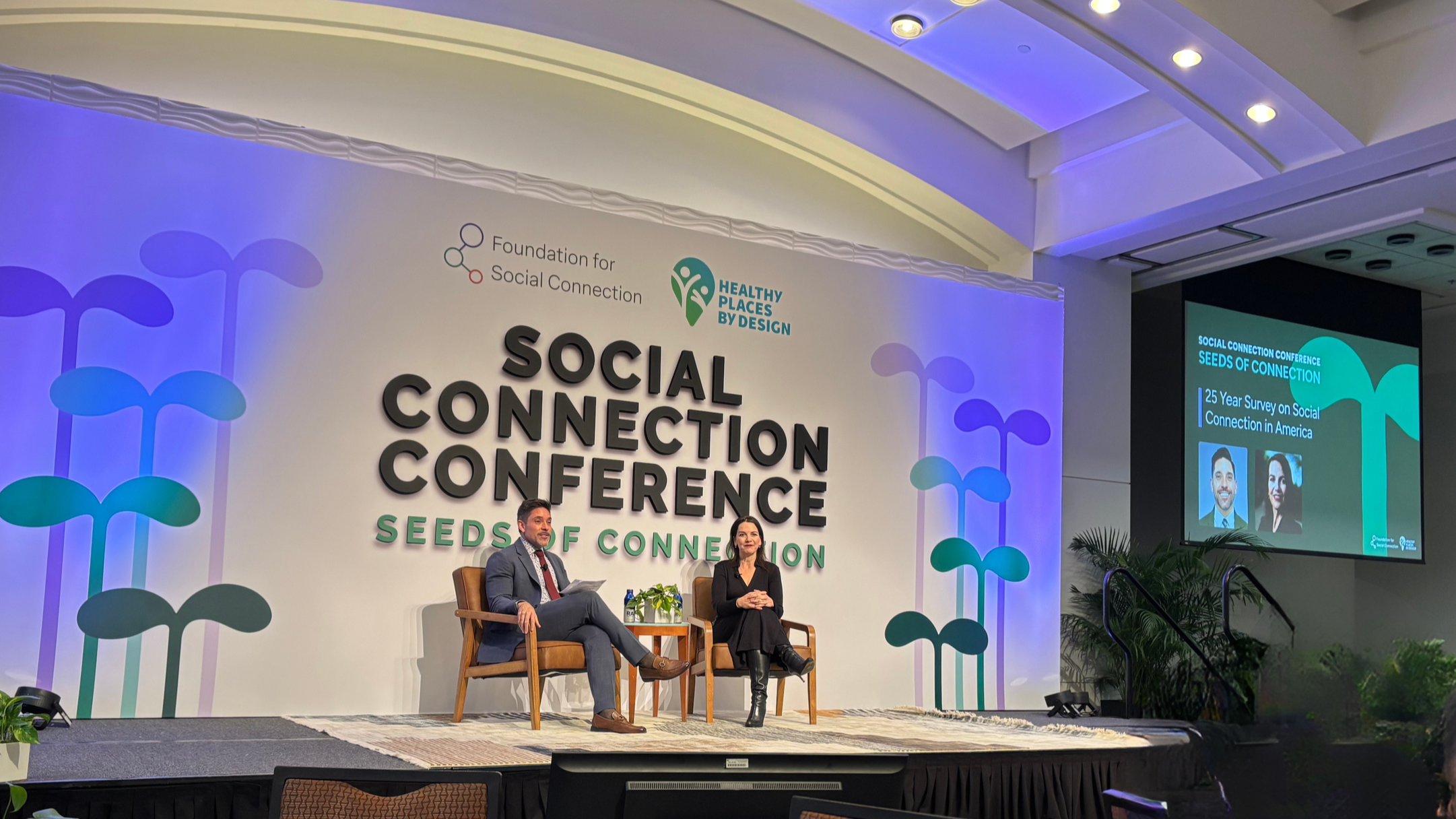
This year, I’ve had the privilege of serving on the Foundation for Social Connection’s Social Capital Roadmap Working Group—a national effort to understand how the architecture of relationships shapes health, opportunity, and mobility.
“With social momentum comes the even bigger opportunity to have an impact at the policy, systems, and environmental reform level… we need to understand what people are experiencing around social connection or disconnection in a more consistent and standardized way.”
— Edward Garcia, Founder, Foundation for Social Connection
We often talk about infrastructure as roads and bridges, but connection is infrastructure too. It’s the library that doubles as a community hub.
It’s the park bench that invites conversation.
It’s the corner café where strangers become neighbors.
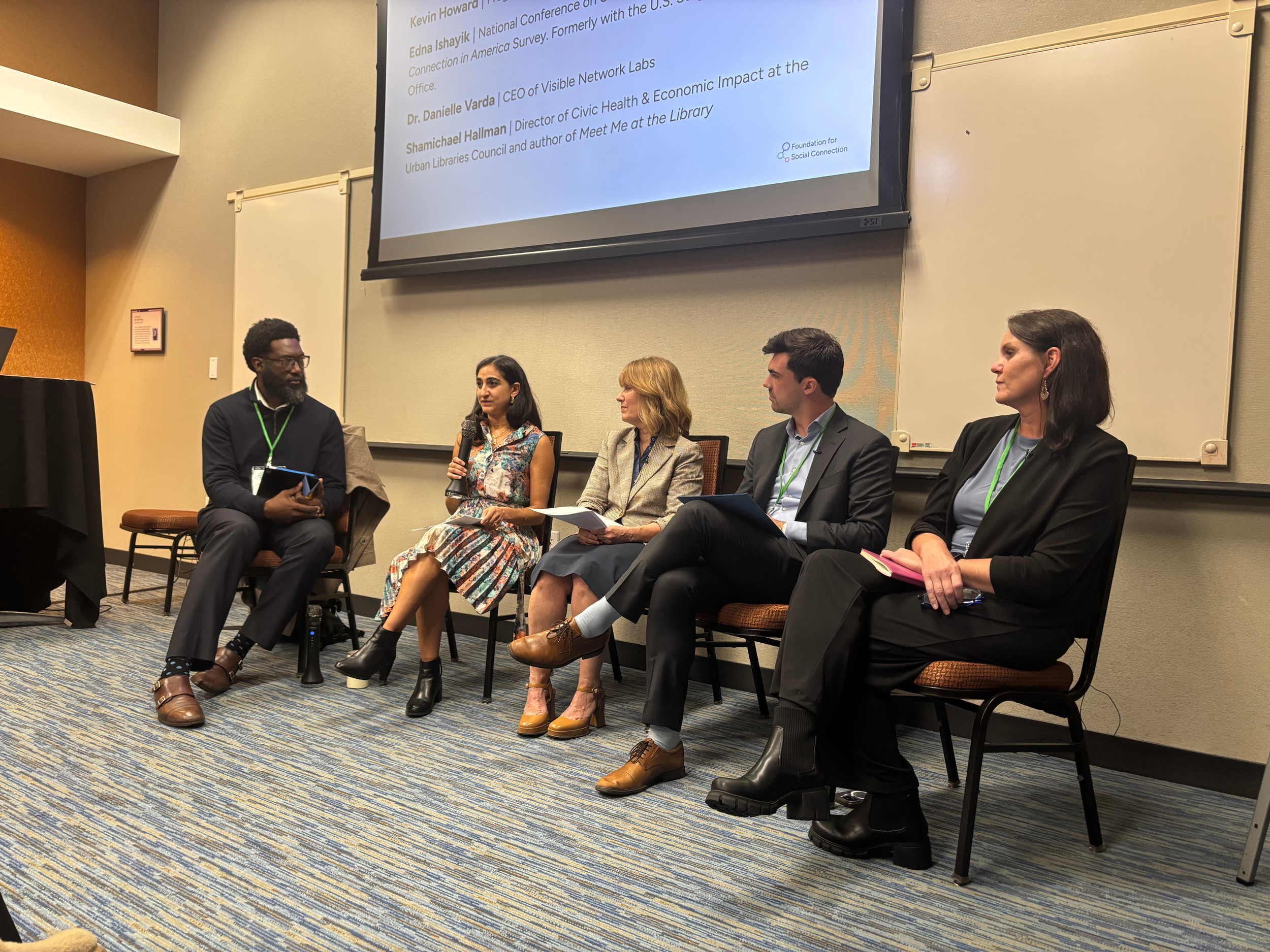
Julianne Holt-Lunstad, an international scientific expert focused on social connection, shared that this is “the first U.S. national survey to comprehensively measure social connection—not only at the individual level, but at the community level.”
That data gives us language and evidence for what designers, planners, and community leaders have long known: belonging isn’t abstract—it’s measurable, structural, and vital to public health.
From Policy to Place
Throughout the SEEDS Conference, I was reminded that building social capital isn’t only about interpersonal kindness—it’s about physical conditions that let relationships flourish.
“The library may be the only place where people from all walks of life can actually show up—regardless of where they slept, their education level, or income… there is really amazing connection that is happening there.”
— Shamichael Hallman, author of Meet Me at the Library
He went on to say:
“We have to invest in these local places—libraries, parks, community centers, waterfronts, plazas. Every community deserves a civic asset that is a beautiful place. These places should inspire joy, ignite collaboration and connection.”
That phrase—ignite collaboration and connection—echoed through the halls in Atlanta. Public spaces are never neutral: they either reinforce isolation or foster belonging.
Edna Ishayik, former Senior Advisor in the office of the US Surgeon General, reminded us why this matters at every scale:
“In local communities, there’s a reduction in premature mortality, better mental health, lower overdose rates, fewer emergency room visits. Belonging and inclusion have tangible outcomes—they’re life-changing.”
Social connection isn’t sentimental—it’s structural.
Communities with strong networks even recover better from disasters and economic crises.
“Individuals create connection, neighborhoods feel connection, that has impacts, that has positive benefits… and that changes your government to make it more responsive. There are more perspectives being heard, and that breeds trust.”
— Edna Ishayik
What Belonging Looks Like
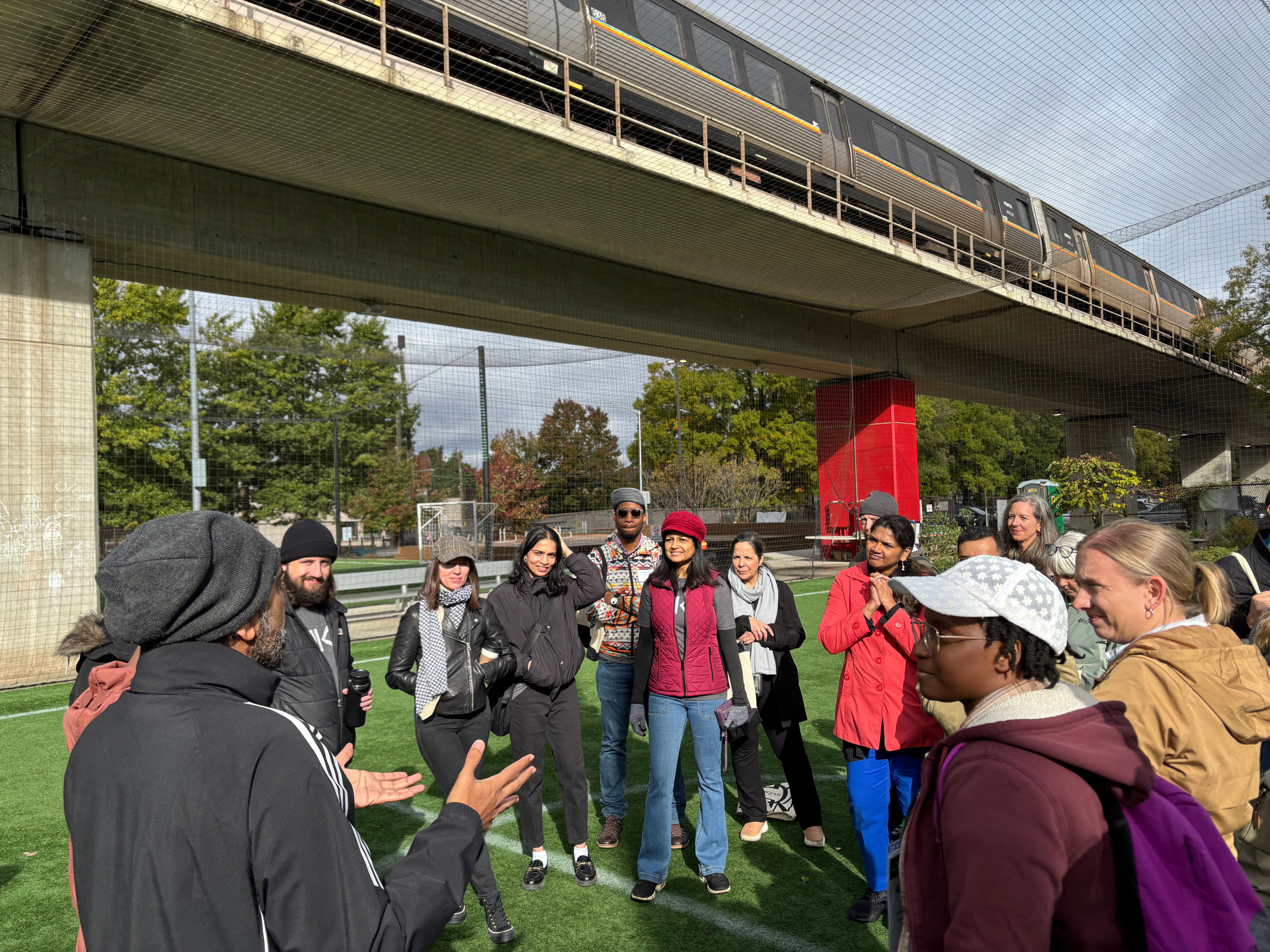
At SEEDS, belonging was tangible.
It was the friend you finally met in person after four years of Zoom squares.
It was the sensory room that said, you belong here, too, even when you need quiet.
It was the Better Block alcoves where dialogue replaced distance.
The conference modeled what the Social Capital Roadmap calls for: investment in the architecture of relationships—from national data systems to neighborhood design.
Belonging happens across scales—from the intimacy of a conversation to the design of a plaza to the policies that decide where those plazas even exist.
Join the Movement to Design for Connection
The Foundation for Social Connection’s Social Capital Roadmap offers a blueprint for communities and practitioners who want to design, measure, and advocate for connection more intentionally.
If you’re an architect, planner, public health professional, or simply someone who believes that relationships are health infrastructure, I invite you to:
✅ Explore the Roadmap → social-connection.org/socialcapital
✅ Follow the Foundation for Social Connection → social-connection.org
✅ Subscribe to their newsletter to stay involved in the growing movement for social health.
Let’s design for connection as intentionally as we design for safety or beauty.
Because the places we create shape not just how we live—but how we belong.