What a Kid’s Party Teaches Us About Outdoor Design
A porch, a parade around the block, and a reminder that the best gathering spaces don't require a design budget.
First published in Design for Happiness newsletter, Summer 2025
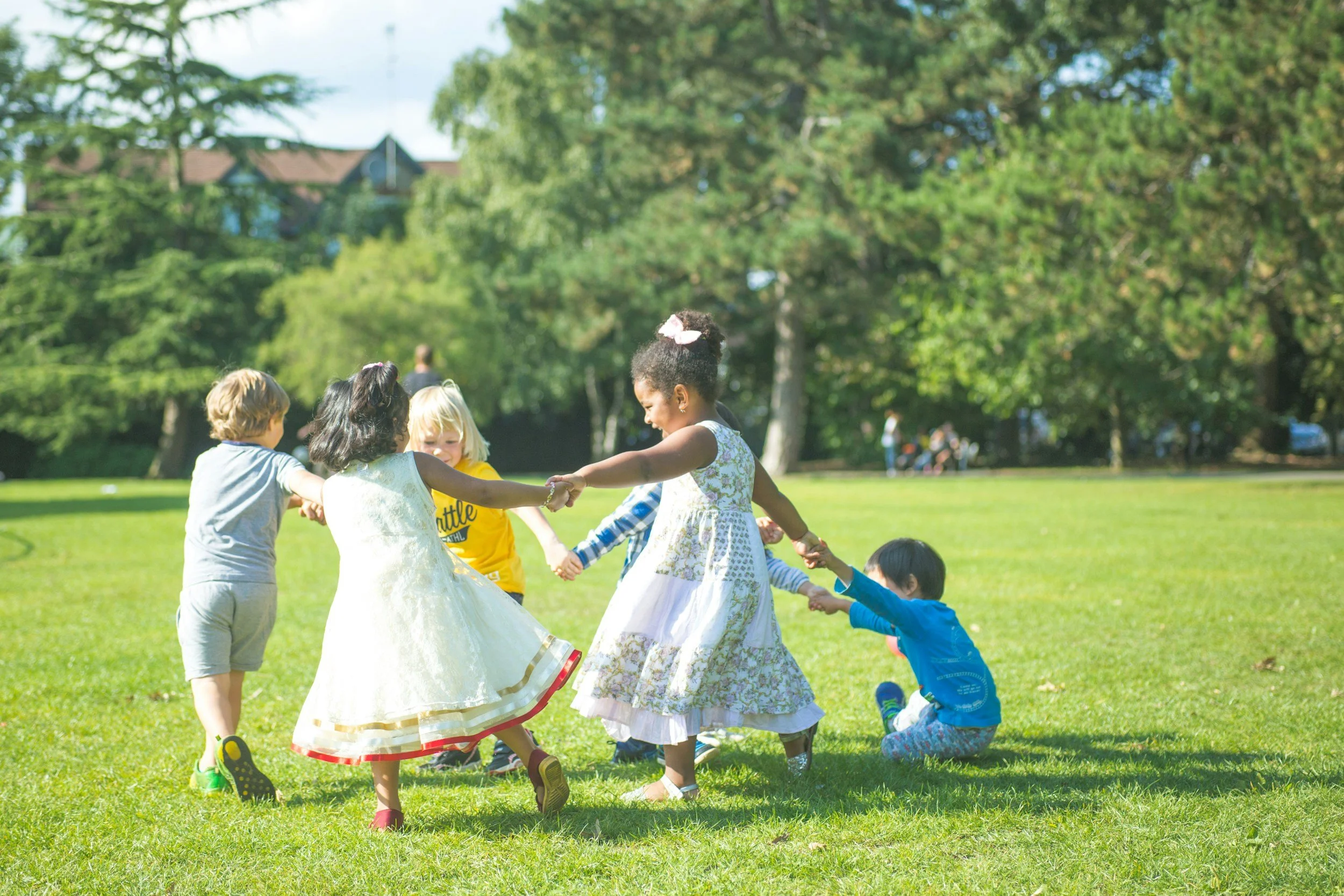
This weekend, on a 90-degree Texas afternoon, my neighbor Victoria turned four. There were no elaborate decorations, no rented inflatables, no choreographed entertainment. Just her front porch, a parade of scooters and streamers looping the block, and ice cream for everyone who showed up. More than ten children — from eight months to eight years old — arrived, played, sweated, and stayed longer than anyone expected. It was, by every measure of formal event planning, unremarkable. And yet the architect in me couldn't stop thinking about it for days.
What made that gathering work had almost nothing to do with programming and everything to do with space. The porch sat at the edge of the sidewalk — low enough to feel connected to the street, shaded enough to be bearable, open enough that passersby could see in and feel welcome to slow down. The loop around the block gave children a route and a reason to move. The ice cream gave everyone a shared ritual that required nothing from them except showing up. The space did most of the work. The hosts just unlocked the gate.
Why Outdoor Space Does What Indoor Space Often Can't
Research on third places — the spaces beyond home and work where community actually forms — consistently points to outdoor environments as some of the most powerful sites of spontaneous connection. Unlike programmed indoor events, well-designed outdoor spaces lower what sociologists call the barrier to entry: the social cost of showing up. When a space is open, readable, and sensory-rich, people feel permission to arrive as they are and to leave whenever they want. That freedom is, paradoxically, what makes them stay.
A Stanford study on pop-up parks offers a striking illustration: a small, 0.2-acre temporary park in Los Altos, California drew roughly 500 visitors per day at its peak, with 85 percent of visitors saying they would not have spent time at any other park if this one had not existed. The intervention was modest. The social impact was not. What the pop-up offered was not grandeur but presence — a legible place that said: come, something is happening here.
Design Elements That Make Outdoor Spaces Come Alive
The birthday party and the pop-up park share a common vocabulary. Movable, flexible elements — chairs that can be rearranged, shade that can shift, furniture that invites lingering rather than passing through — allow people to negotiate space on their own terms. Biophilic elements like native plantings, water features, and natural materials reduce ambient stress and lower social inhibitions. Tactile variety gives people something to notice, to touch, to comment on — which is often all a conversation needs to begin. And a clear, shared ritual (a parade route, a scoop of ice cream, a market stall) gives strangers a role to play without requiring them to introduce themselves.
Tactical urbanism — the practice of using lighter, quicker, cheaper interventions to test and activate space before committing to permanent design — has shown that these ingredients work at every scale. Parklets that convert a single parking space into a seating area. Temporary bike lanes with potted plants as buffers. A pop-up market on a street corner that's been empty for years. The investment is small. The signal to the neighborhood is not: this street is worth slowing down for.
Where in your neighborhood is there a stretch of sidewalk, a porch, a parking lot, or an underused corner that could become a place worth pausing? The question isn't what it would take to build something permanent — it's what it would take to unlock it for an afternoon.
Research & Resources
• Project for Public Spaces: "Lighter, Quicker, Cheaper" intervention strategies — pps.org
• Stanford Pop-Up Park Study: temporary interventions and daily use patterns
• Ray Oldenburg, The Great Good Place — the foundational text on third places
• Biophilic design and well-being: a growing body of evidence from WELL Building Standard research